

Every day, your body absorbs emotional energies from the world around you. Some emotions bring joy and lightness. Others leave behind heavy feelings that cling to your energy body like shadows.
These trapped emotions don’t just disappear on their own. They settle into your system and create blockages. Over time, these blockages affect your mental clarity, physical health, and spiritual well-being.
The good news is that you can learn to clear these energies. You can create a personal sanctuary where peace and renewal become your natural state. This comprehensive guide will show you exactly how.
Understanding What Emotional Energies Are and Why They Matter
Emotional energies are the invisible forces that emotions create in your body and mind. When you experience feelings, your brain generates neurochemical responses. These responses create energy patterns that flow through your system.
Think of your energy body as a second layer that surrounds and interpenetrates your physical form. This energy body registers every emotion you feel. It stores memories of significant events and holds patterns from your past.
How Emotions Create Energy Patterns in Your Body
Your limbic structures brain processes emotional information constantly. When you encounter a situation that triggers feelings, your nervous system responds immediately. This response creates a cascade of physical and energetic effects.
Happy emotions create expansive, flowing energy. Difficult emotions like fear or anger create contractive, stuck patterns. Your body remembers these patterns even after the initial event passes.
The problem starts when negative energies accumulate over time. One stressful day won’t harm you. But years of unprocessed emotions create layers of energetic debris. This buildup affects every aspect of your life.

The Connection Between Thoughts, Emotions, and Physical Sensations
Your thoughts trigger emotions. Your emotions trigger physical sensations. And physical sensations feed back into your thoughts. This creates a continuous loop that shapes your experience of life.
When you hold negative thoughts repeatedly, they become emotional patterns. These patterns settle into specific parts of your body. You might notice tension in your shoulders during stress. Or a tight feeling in your chest when anxious.
Research shows that trapped emotions can contribute to chronic pain and illness. Your mind and body work as one integrated system. What affects your emotional state affects your physical health too.
Mental Signs of Blocked Energy
Your mind shows clear signals when emotional energies need clearing. Pay attention to these mental indicators.
- Racing thoughts that won’t quiet down
- Difficulty concentrating on simple tasks
- Persistent negative self-talk patterns
- Brain fog that clouds your judgment
Physical Signs of Blocked Energy
Your body communicates blocked energy through various physical symptoms. Listen to what it tells you.
- Chronic muscle tension in specific areas
- Unexplained fatigue despite adequate rest
- Digestive issues with no clear cause
- Irregular sleep patterns or insomnia
Emotional Signs of Blocked Energy
Emotional blockages manifest through consistent feeling patterns. Recognize these common emotional signals.
- Sudden mood swings without clear triggers
- Feeling numb or disconnected from feelings
- Overwhelming anxiety about daily situations
- Depression that lingers without explanation
Spiritual Signs of Blocked Energy
Your spiritual well-being suffers when energies remain trapped. Watch for these spiritual warning signs.
- Loss of purpose or direction in life
- Feeling disconnected from your inner self
- Inability to experience joy or gratitude
- Sense of being stuck in old patterns
How Negative Emotional Energies Impact Your Well-Being
Uncleared emotional energies don’t stay neutral. They actively interfere with your ability to live fully. Understanding these impacts helps you see why Clearing Emotional Energies matters so much for your overall health.
Mental Health Effects of Accumulated Emotional Energy
Your brain works hard to process emotions every day. When you don’t release emotions properly, they create mental clutter. This clutter takes up valuable mental resources.
People with unprocessed emotional baggage often struggle with decision-making. The weight of old feelings clouds their judgment. They second-guess themselves constantly because past pain colors present choices.
Anxiety and depression often have roots in trapped emotional energy. Your nervous system stays on high alert when old traumas remain unresolved. This chronic activation exhausts your mental resilience over time.

Start Your Healing Journey Today
Download our free 10-minute guided meditation designed specifically for releasing emotional tension and restoring mental clarity. Perfect for beginners seeking immediate relief.
Physical Health Consequences of Unresolved Emotions
Your body stores emotional stress in specific locations. Grief often settles in the chest. Anger typically lodges in the liver and shoulders. Fear concentrates in the kidneys and lower back.
These aren’t just metaphors. Medical research confirms that emotional stress contributes to real physical conditions. Chronic pain, autoimmune disorders, and cardiovascular problems all show links to unprocessed trauma.
The mind-body connection works both ways. When you carry emotional baggage, your immune system weakens. You become more susceptible to illness. Your body spends energy managing old wounds instead of maintaining health.
Research Insight: Studies show that people who regularly practice emotional release techniques report significantly lower levels of chronic pain. The mind’s ability to hold or release emotions directly affects physical symptoms.
Spiritual Disconnection from Energetic Blockages
Heavy emotional energies create a barrier between you and your spiritual self. This barrier prevents you from accessing deeper wisdom and intuition. You lose touch with your authentic nature.
Many people describe feeling “lost” or “empty” when energetic blockages accumulate. This isn’t weakness. It’s a natural result of disconnection from your energy body and spiritual core.
Spiritual growth requires clear energy channels. When these channels stay blocked, you can’t receive higher guidance. You remain stuck in survival mode rather than thriving in alignment with your purpose.
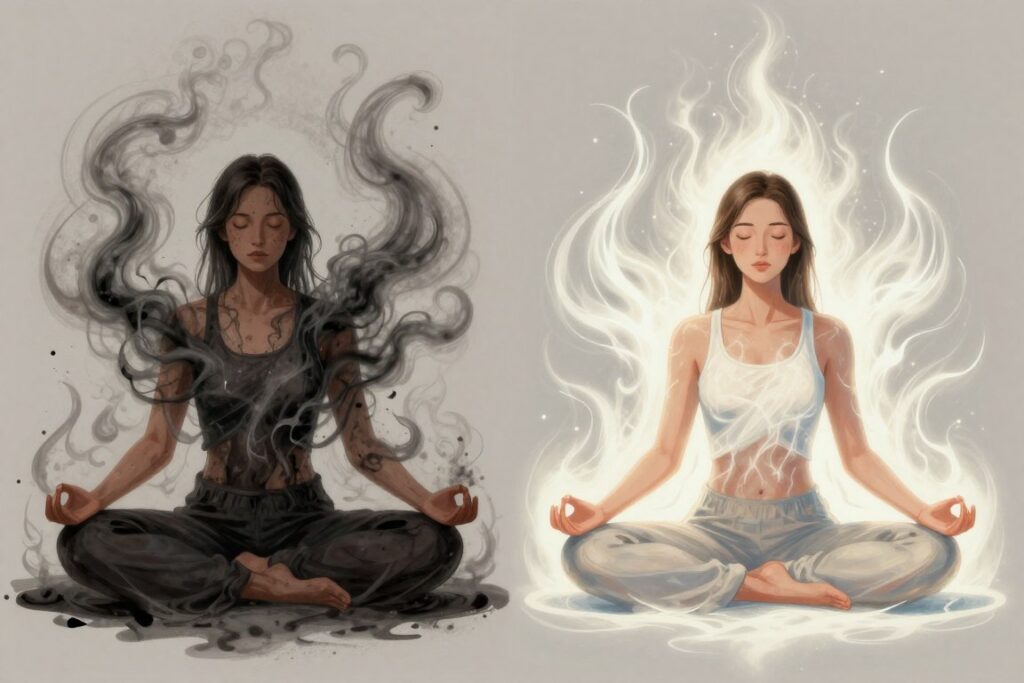
Breathwork and Meditation Practices for Clearing Emotional Energies
Your breath serves as a bridge between body and mind. Conscious breathing techniques offer one of the most accessible ways to release emotions trapped in your system. These practices work because breath directly influences your nervous system.
Basic Breathwork Techniques for Emotional Release
Start with simple breath awareness. Sit comfortably and notice your natural breathing pattern. Don’t try to change anything at first. Just observe the rhythm and depth of each breath.
As you watch your breath, you’ll notice areas of tension. Your body holds emotions in specific places. Shallow breathing often indicates trapped energy in your chest or abdomen.
The 4-7-8 breathing technique helps calm your nervous system quickly. Breathe in through your nose for four counts. Hold your breath for seven counts. Exhale completely through your mouth for eight counts. Repeat this cycle for several minutes.
Quick Practice: Try box breathing when you feel overwhelmed. Inhale for 4 seconds, hold for 4 seconds, exhale for 4 seconds, hold empty for 4 seconds. Repeat this pattern for 5 minutes to restore emotional balance.
Meditation Methods That Target Trapped Emotions
Body scan meditation helps you locate and release emotions stored in your physical form. Lie down in a comfortable position. Bring attention to your toes and slowly move awareness up through your entire body.
When you find areas of tension or discomfort, breathe into them. Imagine your breath carrying healing energy to that part. On the exhale, visualize the trapped emotion leaving your body as dark smoke.
Loving-kindness meditation addresses emotional wounds through compassion. This practice softens the harsh energy of self-judgment and resentment. It transforms negative emotional patterns into acceptance and peace.
- Find a quiet space where you won’t be disturbed for at least 10 minutes
- Sit in a comfortable position with your spine naturally straight
- Close your eyes and take three deep cleansing breaths
- Bring to mind someone you love easily and unconditionally
- Generate warm feelings toward this person, saying “May you be happy, may you be healthy”
- Gradually extend these feelings to yourself, then to neutral people, then to difficult people
- End by radiating loving-kindness to all beings everywhere
Guided Visualization for Energy Body Clearing
Visualization works powerfully because your brain responds to imagined experiences similarly to real ones. When you visualize clearing your energy body, you activate real neurological pathways that support emotional release.
Picture your energy body as a luminous field surrounding your physical form. Scan this field for areas that appear dark, murky, or heavy. These spots represent trapped emotional energies.
Imagine a bright healing light entering through the top of your head. This light flows through your entire energy body, dissolving blockages as it moves. Watch the dark spots gradually brighten and clear.

Daily Meditation Routine for Emotional Maintenance
Consistency matters more than duration when building a meditation practice. Five minutes daily beats one hour weekly. Your brain and energy body respond best to regular, repeated practice.
Morning meditation sets the tone for your entire day. Spend just five to ten minutes centering yourself before activities begin. This practice creates a buffer against stress that might otherwise accumulate.
Evening meditation helps you process the day’s emotional content. Take time before bed to review your feelings. Release any tensions or worries so they don’t follow you into sleep.
| Time of Day | Practice Type | Duration | Primary Benefit |
| Early Morning (6-7 AM) | Breath Awareness | 5-10 minutes | Sets calm intention for the day |
| Midday (12-1 PM) | Body Scan | 3-5 minutes | Releases accumulated tension |
| Late Afternoon (4-5 PM) | Walking Meditation | 10-15 minutes | Combines movement with awareness |
| Evening (8-9 PM) | Loving-Kindness | 10-15 minutes | Processes daily emotional content |
Energy Healing Modalities for Deep Emotional Clearing
Beyond meditation and breathwork, specialized energy healing methods target trapped emotions at deeper levels. These modalities work directly with your energy body to dissolve blockages that have persisted for years.
Understanding Energy Healing and How It Works
Energy healing operates on the principle that your body has natural self-healing abilities. These abilities work through your energy system. When energy flows freely, healing happens naturally. Blockages interrupt this flow and prevent healing.
Practitioners of energy healing use various techniques to restore proper energy flow. Some methods involve light touch. Others work entirely within your energy field without physical contact. All aim to remove obstacles that prevent natural healing.
Your energy body responds to focused intention and attention. When you direct healing energy to specific areas, you activate dormant healing resources. This process doesn’t require belief—it works through universal energy principles.

Reiki and Hands-On Healing Techniques
Reiki represents one of the most widely practiced energy healing systems. This Japanese technique uses gentle hand placements to channel universal life force energy. The energy flows to wherever your body needs it most.
During a Reiki session, you remain fully clothed while lying comfortably. The practitioner places their hands on or slightly above specific points on your body. You might feel warmth, tingling, or deep relaxation as energy blockages release.
You can also learn Reiki self-treatment techniques. These allow you to work on your own energy body between professional sessions. Regular self-Reiki maintains clear energy channels and prevents new blockages from forming.
Chakra Balancing for Emotional Equilibrium
Your chakra system consists of seven main energy centers along your spine. Each chakra relates to specific emotional and physical functions. When chakras become blocked or imbalanced, corresponding emotional issues arise.
The heart chakra, located in the center of your chest, governs your ability to give and receive love. Blockages here create difficulty with relationships and self-acceptance. Clearing this chakra releases trapped emotions related to grief and rejection.
The solar plexus chakra sits above your navel. It controls personal power and self-esteem. When blocked, you might feel powerless or struggle with confidence. Clearing this center restores your sense of agency and purpose.
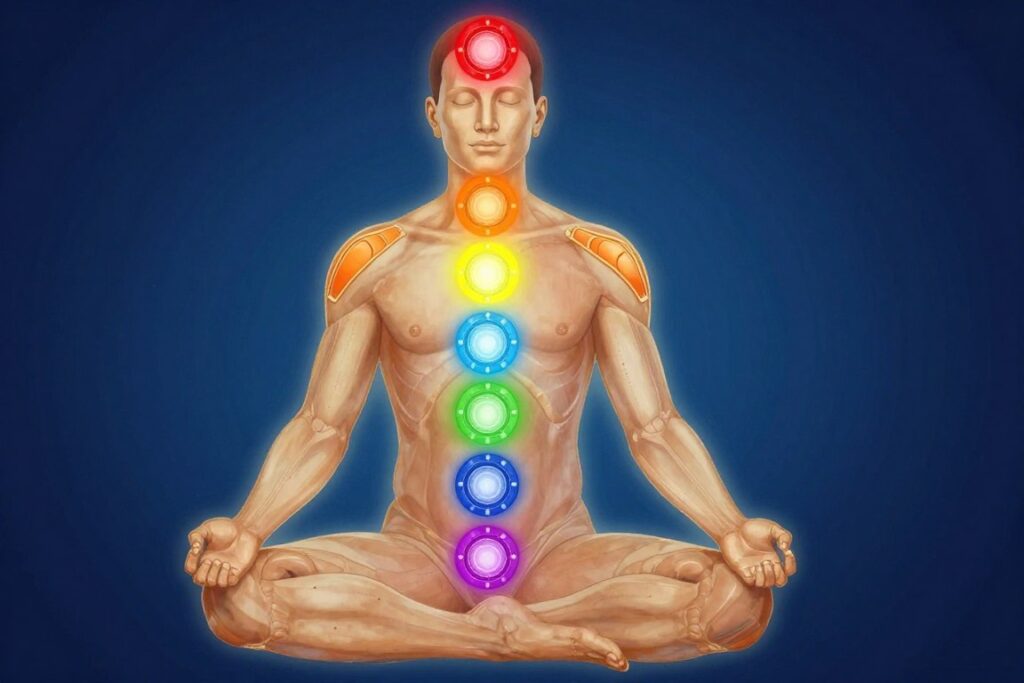
Root Chakra
Located at the base of your spine. Governs survival, security, and grounding. Blockages create anxiety and fear.
- Color: Red
- Element: Earth
- Healing: Grounding exercises, walking barefoot
Sacral Chakra
Located below your navel. Controls creativity, sexuality, and emotions. Blockages limit joy and pleasure.
- Color: Orange
- Element: Water
- Healing: Dance, creative expression
Solar Plexus Chakra
Located above your navel. Manages personal power and confidence. Blockages cause low self-esteem.
- Color: Yellow
- Element: Fire
- Healing: Core exercises, affirmations
Heart Chakra
Located in chest center. Governs love, compassion, and relationships. Blockages create emotional walls.
- Color: Green
- Element: Air
- Healing: Heart-opening yoga poses
Throat Chakra
Located at your throat. Controls communication and truth. Blockages prevent authentic self-expression.
- Color: Blue
- Element: Ether
- Healing: Singing, journaling
Third Eye Chakra
Located between your eyebrows. Manages intuition and insight. Blockages cloud perception and judgment.
- Color: Indigo
- Element: Light
- Healing: Meditation, visualization
Sound Healing and Vibrational Therapy
Sound waves carry vibrational energy that can penetrate deep into your body. Different frequencies affect your cells, tissues, and energy field in specific ways. Sound healing uses these properties to release trapped emotions.
Singing bowls produce pure tones that resonate with your chakras. When played near your body, these bowls create vibrations that break up energetic congestion. You might feel physical sensations as blockages dissolve.
Your own voice provides a powerful healing tool. Toning—making sustained vocal sounds—massages your internal organs and energy channels. Try humming or chanting simple vowel sounds to experience this effect.
Mindfulness Exercises for Present-Moment Emotional Processing
Mindfulness means bringing full awareness to the present moment. This practice prevents new emotional debris from accumulating. When you stay present, emotions flow through you naturally instead of getting stuck.
Developing Moment-to-Moment Awareness
Your mind spends most of its time in the past or future. Thoughts about yesterday’s argument or tomorrow’s deadline pull your attention away from now. This mental time travel creates stress and emotional buildup.
Mindfulness training teaches you to anchor attention in present experience. You notice thoughts and feelings as they arise. Instead of getting caught in them, you observe them pass like clouds in the sky.
Start with short mindfulness periods. Set a timer for two minutes. During this time, focus entirely on one sense. Maybe you listen to all the sounds around you. Or you notice every sensation in your hands.

Emotional Labeling and Recognition Practices
Many people struggle to identify what they actually feel. You might sense discomfort but can’t name the specific emotion. This vagueness prevents effective processing.
Practice naming your emotions precisely. Instead of “I feel bad,” try “I feel frustrated” or “I feel disappointed.” This specificity helps your brain process the feeling more efficiently.
Use the RAIN technique for emotional awareness. Recognize the emotion. Allow it to be present without fighting it. Investigate where you feel it in your body. Nurture yourself with compassion as you experience it.
Mindfulness Tip: Create an emotion wheel chart with nuanced feeling words. When emotions arise, consult your chart to identify the precise feeling. This practice builds emotional vocabulary and processing skills.
Non-Judgmental Observation of Feelings
Judgment adds a second layer of suffering to difficult emotions. You feel angry, then judge yourself for feeling angry. This judgment creates shame and guilt—more emotions that need processing.
Mindfulness teaches neutral observation. You notice “anger is present” without adding “I shouldn’t feel this way.” This simple shift removes resistance that keeps emotions trapped.
Practice witnessing your thoughts and feelings as a curious observer. Imagine you’re a scientist studying your inner experience. This perspective creates healthy distance without suppression or avoidance.
Benefits of Mindful Emotional Processing
- Emotions move through you more quickly
- Reduced rumination on negative thoughts
- Greater emotional resilience over time
- Improved ability to self-regulate
- Deeper self-understanding and awareness
- Less reactive behavior in relationships
Common Mindfulness Challenges
- Initial discomfort facing difficult emotions
- Requires consistent daily practice
- Mind wanders frequently at first
- Can feel awkward or unnatural initially
- Takes time to see significant results
- May bring up buried emotional content
Integrating Mindfulness into Daily Activities
You don’t need special time set aside for mindfulness. Transform ordinary activities into awareness practices. Washing dishes becomes an opportunity to notice water temperature and soap texture.
Eat one meal per day mindfully. Put away your phone and turn off the TV. Notice the colors, smells, textures, and flavors of your food. This simple practice brings you fully into the present moment.
Practice mindful transitions between activities. Before switching tasks, pause for three conscious breaths. This creates space between experiences and prevents emotional carryover from one situation to the next.
Physical Practices and Movement for Releasing Emotional Energy
Your body stores emotions in muscles, tissues, and cellular memory. Physical movement provides a direct pathway to release these stored feelings. Intentional movement helps emotions complete their natural cycle.
Yoga Practices for Emotional Release
Yoga combines physical postures with breath and awareness. This integration makes yoga particularly effective for emotional clearing. Specific poses target areas where people commonly hold tension.
Hip-opening poses release deep emotional storage. Many people cry during pigeon pose or butterfly stretch. These tears represent healthy release, not weakness. Your hips hold memories of traumatic events and repressed emotions.
Heart-opening poses like cobra or camel can bring up vulnerable feelings. When you physically open your chest, emotional barriers soften too. You might feel waves of sadness, joy, or relief during these postures.

- Begin in child’s pose to ground and center yourself
- Move through gentle cat-cow stretches to warm your spine
- Practice several rounds of sun salutations to build heat
- Hold hip-opening poses like pigeon or lizard for 3-5 minutes each side
- Include heart-opening backbends like cobra or bridge pose
- Practice gentle twists to wring out stagnant energy
- End with a 10-minute savasana to integrate the release
Somatic Movement and Body Awareness
Somatic practices emphasize internal body sensations over external form. Unlike traditional exercise, somatic movement focuses on feeling rather than achieving. This approach accesses deeper layers of stored emotion.
Shaking represents a natural trauma-release mechanism. Animals shake after threatening situations to discharge stress hormones. Humans benefit from this same process. Stand with knees slightly bent and gently bounce, allowing your whole body to shake.
Dance offers another powerful somatic release method. Put on music that matches your current emotional state. Move however your body wants to move. This unstructured movement lets suppressed feelings express through physical form.

Walking and Nature-Based Movement Practices
Walking meditation combines the benefits of movement with mindfulness practice. Focus your attention on each step. Feel your foot contact the ground. Notice the shift of weight from heel to toe.
Nature amplifies the healing effects of walking. Trees emit compounds that reduce stress hormones. Natural settings lower blood pressure and calm your nervous system. A 20-minute nature walk provides measurable psychological benefits.
Try earthing or grounding—walking barefoot on natural surfaces. Direct contact with the earth transfers electrons that neutralize free radicals. Many people report feeling more centered and emotionally balanced after grounding.
Breathwork Combined with Physical Movement
Intentional movement paired with conscious breathing multiplies emotional release. Your breath carries emotions out of your system. Movement provides the physical mechanism for release. Together, they create powerful transformation.
Try this simple practice: Stand with feet hip-width apart. As you inhale, raise your arms overhead and arch slightly backward. As you exhale, fold forward and let your arms hang. Repeat this movement for five minutes, matching breath to motion.
Kundalini yoga specializes in combining breath, movement, and sound. These practices specifically target the energy body and can produce profound emotional clearing. Students learn to move energy deliberately through their system.
Morning Energy Wake-Up
Start your day with this 5-minute movement sequence. Combine gentle stretching with deep breathing to clear overnight energy accumulation and set positive intentions.
- 5 minutes of gentle full-body stretching
- Focus on breath awareness throughout
- Notice any emotional shifts as you move
Midday Tension Release
Use your lunch break for this quick movement reset. Release accumulated stress from your morning and prepare for a productive afternoon with renewed energy.
- 10-minute walk outside if possible
- Practice shoulder rolls and neck stretches
- End with 2 minutes of standing meditation
Evening Emotional Processing
This evening practice helps you process the day’s emotional content. Release stored tension before bed to improve sleep quality and wake refreshed.
- 20 minutes of gentle yoga or stretching
- Include hip openers and twists
- Finish with 10 minutes in savasana
Shadow Work and Deep Emotional Clearing Practices
Shadow work addresses the parts of yourself you’ve rejected or denied. These hidden aspects contain tremendous emotional energy. Integrating your shadow releases this trapped energy and restores wholeness.
Understanding Your Emotional Shadow
Your shadow consists of qualities you learned to hide during childhood. Maybe you were told “big kids don’t cry” or “don’t be so sensitive.” These messages taught you to suppress natural feelings and parts of your personality.
The shadow doesn’t disappear just because you ignore it. Those rejected parts continue influencing your behavior unconsciously. They emerge as emotional triggers, projection onto others, and self-sabotaging patterns.
Shadow work brings these hidden aspects into conscious awareness. This process requires courage and honesty. You must look at parts of yourself you’ve spent years avoiding. The reward is profound emotional freedom and authenticity.

Journaling Practices for Emotional Exploration
Writing accesses emotions differently than thinking alone. When you put feelings into words on paper, you create distance that allows for processing. Journaling transforms vague emotional states into concrete understanding.
Try stream-of-consciousness writing for shadow exploration. Set a timer for 10 minutes. Write continuously without stopping to edit or censor. Let whatever wants to emerge flow onto the page.
Dialog journaling helps you communicate with difficult emotions or inner parts. Write a question with your dominant hand. Then switch hands and let the emotional part respond. This technique often reveals surprising insights.
Shadow Work Prompt: “What emotion am I most afraid to feel, and what would happen if I allowed myself to feel it fully?” Write for 10 minutes without stopping. Notice any resistance that arises.
Working with Triggers and Emotional Patterns
Triggers are doorways to your shadow. When someone or something provokes a disproportionate emotional response, your shadow has been activated. Rather than avoiding triggers, use them as healing opportunities.
When triggered, pause before reacting. Ask yourself: “What part of me feels threatened right now?” Often, triggers connect to childhood wounds or unmet needs. The present situation reminds your unconscious of past pain.
Track your emotional patterns over time. Notice recurring themes in your reactions. Do you always feel abandoned when plans change? Do you rage when feeling powerless? These patterns point toward core shadow material.
Deep Dive into Emotional Healing
Ready to explore your emotional landscape more deeply? Download our comprehensive Emotional Energy Toolkit including shadow work exercises, journaling prompts, and guided practices for lasting transformation.
Integrating Rejected Aspects of Self
Integration means accepting all parts of yourself, even those you consider “bad” or “wrong.” This doesn’t mean acting out destructive impulses. It means acknowledging their existence without judgment.
Practice radical self-acceptance. When you notice a quality you dislike in yourself, say: “This is also me.” Repeat this simple acknowledgment until you feel a softening. Resistance dissolves when you stop fighting yourself.
Find the positive intention behind shadow qualities. Anger might protect your boundaries. Selfishness might honor your needs. Every “negative” trait serves a purpose when understood and integrated properly.
Creating Your Sanctuary: Designing Space for Inner Peace
Your physical environment affects your emotional state constantly. A cluttered, chaotic space reinforces internal disorder. A peaceful, intentional sanctuary supports emotional clearing and renewal.
Choosing and Preparing Your Sacred Space
You don’t need a separate room to create a sanctuary. A corner of your bedroom or a chair by a window can serve perfectly. What matters is designating this space specifically for peace and renewal.
Clear your chosen area completely. Remove items that don’t serve your intention of peace. Each object in your sanctuary should either bring joy or support your practice. Less is more in sacred space design.
Physically clean your space thoroughly before establishing it as sanctuary. Cleaning acts as a ritual that marks the transition. As you wipe surfaces and organize, set the intention that this space will hold energy differently.

Environmental Elements That Support Emotional Clearing
Colors influence mood and energy. Blues and greens create calm and promote healing. Soft earth tones ground and stabilize. Choose colors for your sanctuary that evoke the feelings you want to cultivate.
Lighting dramatically affects emotional state. Harsh overhead lights create tension. Natural light, candles, and soft lamps encourage relaxation. Use dimmer switches to control light intensity for different practices.
Scent bypasses your logical brain and directly impacts the limbic structures brain that process emotion. Lavender calms anxiety. Sandalwood deepens meditation. Citrus lifts mood. Use essential oils, incense, or natural candles strategically.
Air Quality Elements
- Indoor plants that purify air
- Natural ventilation when possible
- Air purifier for allergies
- Essential oil diffuser
- Natural incense options
Sound Elements
- Wind chimes for gentle sound
- Small water fountain
- Singing bowl collection
- Quality speakers for music
- White noise machine option
Comfort Elements
- Meditation cushion or bench
- Soft blanket for warmth
- Back support options
- Natural fiber materials
- Temperature control access
Personalizing Your Sanctuary with Meaningful Objects
Include objects that hold personal meaning and positive associations. Photos of loved ones, inspiring quotes, or treasured mementos create emotional resonance. Your sanctuary should reflect your unique spiritual path.
Create a small altar as a focal point. This doesn’t require religious affiliation. An altar simply provides a space to arrange meaningful items and set intentions. Change your altar seasonally to keep energy fresh.
Natural elements connect your sanctuary to earth energy. Stones, shells, feathers, or branches bring nature indoors. These objects carry grounding qualities that support emotional stability and presence.
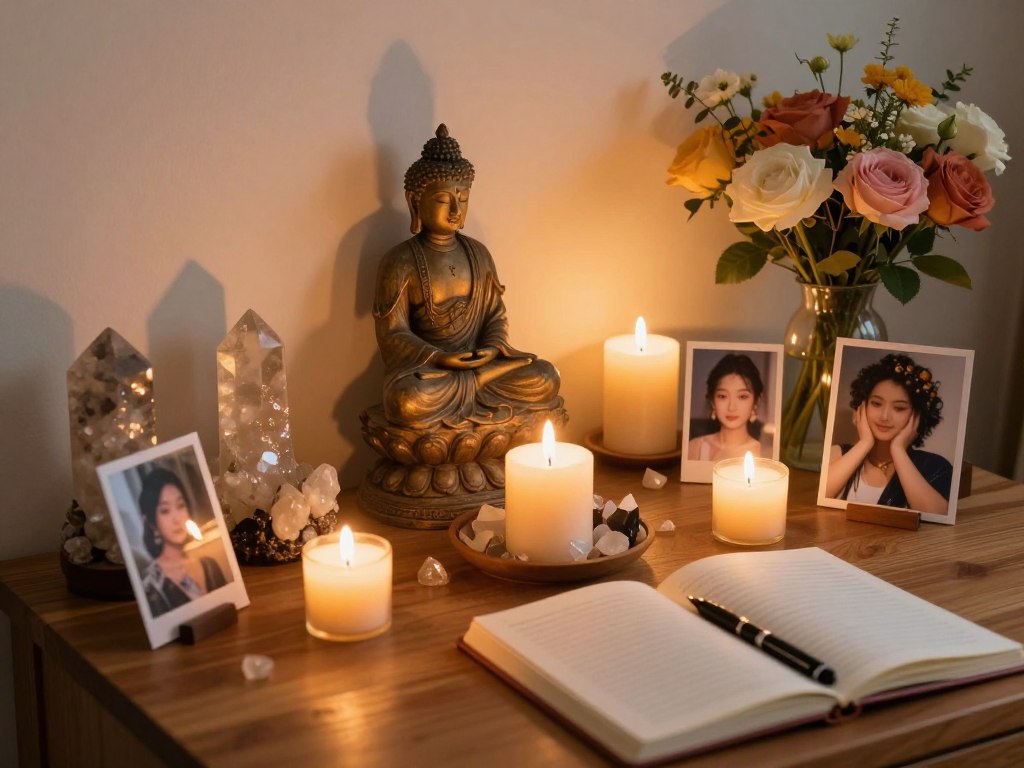
Maintaining Sacred Space Energy
Energy accumulates in spaces just as dust does. Regularly cleanse your sanctuary to prevent stagnant buildup. Physical cleaning combined with energetic clearing maintains the space’s healing qualities.
Smudging with sage, palo santo, or sweetgrass clears negative energy. Open windows while smudging to allow old energy to exit. Move smoke into corners and around the perimeter of your space.
Sound clearing works powerfully too. Ring bells, play singing bowls, or clap loudly in corners. Sound vibrations break up congested energy and restore clear space. Do this weekly or whenever your sanctuary feels heavy.
Daily Renewal Practices for Ongoing Emotional Well-Being
One-time clearing isn’t enough. Emotional energies accumulate constantly as you move through life. Daily renewal practices prevent buildup and maintain the inner peace you’ve cultivated.
Morning Rituals That Set Positive Intention
How you begin your day determines your emotional baseline for hours ahead. Wake up 15 minutes earlier than necessary. Use this time for practices that center and prepare you.
Avoid checking your phone immediately upon waking. Digital stimulation floods your system with external demands before you’ve connected with yourself. Give yourself sacred morning time first.
Try this morning sequence: Drink a glass of water. Do five minutes of gentle stretching. Sit for three minutes of breath awareness. Set one intention for your day. This simple routine takes 15 minutes and transforms your entire day.

- Wake naturally without snoozing alarm if possible
- Hydrate with room temperature water before anything else
- Perform 5 minutes of intuitive stretching or yoga
- Practice 3-5 minutes of meditation or breathwork
- Write 3 things you’re grateful for in a journal
- Set one clear intention for the day ahead
- Eat a nourishing breakfast mindfully without distractions
Midday Check-Ins for Emotional Maintenance
Stress accumulates throughout your day. By afternoon, you’ve absorbed emotional content from commutes, interactions, and work demands. Midday check-ins prevent this accumulation from overwhelming you.
Set a phone reminder for mid-afternoon. When it goes off, stop whatever you’re doing. Take five conscious breaths. Scan your body for tension. Notice what emotions are present without trying to change them.
Use your lunch break for renewal instead of just refueling. Eat away from your desk. Take a short walk. Sit outside if possible. These small acts of self-care compound over time into significant emotional resilience.
Quick Reset Practice: When you feel overwhelmed, try the 5-4-3-2-1 grounding technique. Notice 5 things you see, 4 things you touch, 3 things you hear, 2 things you smell, 1 thing you taste. This brings you back to the present moment.
Evening Wind-Down Routines for Deep Rest
Evening rituals help you transition from doing to being. Your brain needs signals that the day has ended. Without these signals, your mind continues processing work and worries into the night.
Create a shutdown ritual. About an hour before bed, dim lights throughout your home. Turn off screens. The blue light from devices disrupts your natural sleep cycle and prevents emotional processing.
Review your day without judgment. What went well? What challenged you? What emotions did you experience? This reflection prevents emotions from following you into sleep. Write down persistent thoughts to externalize them.
| Time Before Bed | Activity | Purpose |
| 60 minutes | Dim lights, turn off screens | Signal brain that day is ending |
| 45 minutes | Gentle stretching or restorative yoga | Release physical tension from day |
| 30 minutes | Warm bath or shower | Cleanse away day’s energy |
| 15 minutes | Journaling or gratitude practice | Process emotions and set them aside |
| 10 minutes | Meditation or gentle breathing | Calm nervous system completely |
Weekly Deeper Clearing Sessions
Daily practices maintain baseline wellness. Weekly sessions provide deeper clearing of accumulated stress. Schedule one longer session per week for comprehensive emotional maintenance.
Sunday evenings work well for many people. This timing helps you process the past week and prepare mentally for the week ahead. Choose whatever day fits your schedule best.
Use your weekly session for practices that take more time. Extended meditation, thorough yoga practice, or detailed journaling work well. Treat this appointment with yourself as non-negotiable.
Long-Term Practices for Sustained Emotional Wellness
True transformation happens over months and years, not days. Building sustainable emotional wellness requires practices that fit into your real life and adapt as you grow.
Seasonal Emotional Clearing Cycles
Nature moves in cycles. Your emotional landscape does too. Align your clearing practices with seasonal transitions for deeper work that honors natural rhythms.
Spring brings renewal energy perfect for releasing old patterns. Use this season to let go of what no longer serves you. Summer’s expansiveness supports bold emotional expression and play.
Fall invites introspection and harvesting lessons from the year. Winter provides opportunity for deep rest and inner work. Honor these cycles rather than forcing constant productivity.

Building Resilience Through Consistent Practice
Emotional resilience doesn’t mean never feeling difficult emotions. It means recovering quickly when life knocks you down. Consistent practice builds this resilience muscle gradually.
Track your practice in a simple calendar or app. Notice patterns over time. You’ll see how regular practice prevents emotional crises before they develop. This concrete evidence motivates continued commitment.
Expect setbacks and plateaus. Some weeks you’ll miss practices. Some months you’ll feel like you’re going backward. This is normal. Progress isn’t linear. What matters is returning to practice after breaks.
Community Support and Accountability
Healing happens in relationship. While personal practice matters tremendously, connecting with others on similar paths provides invaluable support and perspective.
Find a local meditation group, yoga class, or wellness community. Regular attendance creates accountability. You’re more likely to maintain practice when others expect to see you.
Online communities offer connection if local options don’t exist. Join forums, social media groups, or virtual classes focused on emotional wellness. Share your journey and learn from others’ experiences.
Join Our Inner Peace Community
Connect with others on the path to emotional freedom. Receive weekly guidance, exclusive practices, and community support through our free newsletter. Join thousands of peace-seekers transforming their lives.
Continuing Education and Skill Development
Emotional clearing is a lifelong practice. New techniques and understandings emerge constantly. Commit to ongoing learning to keep your practice fresh and effective.
Attend workshops or retreats annually. These intensive experiences accelerate growth in ways daily practice can’t. They also connect you with teachers and practitioners who can guide your development.
Read books, listen to podcasts, and watch videos about emotional wellness. Diverse perspectives prevent your practice from becoming stale. Each teacher offers unique insights that might unlock your next breakthrough.
Recommended Reading
- The Body Keeps the Score
- When Things Fall Apart
- Radical Acceptance
- The Power of Now
- Letting Go by David Hawkins
Online Resources
- Insight Timer meditation app
- Yoga with Adriene channel
- Tara Brach’s podcast
- Sounds True audio courses
- Local wellness center websites
In-Person Opportunities
- Weekend meditation retreats
- Yoga teacher trainings
- Energy healing certifications
- Wellness conferences
- Local practice groups
When to Seek Professional Support for Emotional Clearing
Self-practice takes you far. But sometimes professional guidance makes the difference between struggling and thriving. Knowing when to seek help is a sign of wisdom, not weakness.
Recognizing When You Need Additional Support
If you’ve been practicing consistently for months without improvement, professional support might help. Some emotional patterns run too deep for self-help alone. Trauma especially benefits from trained guidance.
Persistent physical symptoms without medical cause often indicate trapped emotional energy. If you experience chronic pain, digestive issues, or fatigue that doctors can’t explain, consider emotional root causes.
Thoughts of self-harm or overwhelming hopelessness require immediate professional intervention. These symptoms indicate that your system is overwhelmed and needs expert support to restore balance.
Important: If you’re experiencing thoughts of suicide or self-harm, please contact a mental health professional immediately or call the National Suicide Prevention Lifeline at 988. Professional support can help you through this crisis.
Types of Professional Support Available
Therapists and counselors provide structured support for processing difficult emotions. Many now incorporate body-based and energy approaches. Look for practitioners trained in somatic therapy, EMDR, or trauma-informed care.
Energy healers and bodyworkers address trapped emotions through hands-on techniques. Reiki practitioners, acupuncturists, and massage therapists can all help release stuck energy. Ensure any practitioner you work with has proper training and credentials.
Spiritual teachers or coaches offer guidance on your inner journey. While different from therapy, this support helps you develop personal practice and navigate spiritual growth. Choose teachers whose values align with yours.
Integrating Professional Work with Personal Practice
Professional support works best when combined with consistent self-practice. Your therapist or healer provides guidance and catalyzes shifts. You maintain momentum through daily work between sessions.
Be honest with professionals about your self-practice. Share what techniques you’re using. This information helps them tailor their approach. Integration between professional and personal work accelerates healing.
Don’t abandon self-practice when working with professionals. Sessions provide intensive work. Your daily routine maintains gains and continues clearing. Both elements work together synergistically.

Overcoming Common Challenges in Emotional Clearing Work
Everyone faces obstacles on the path to emotional freedom. Understanding common challenges helps you navigate them skillfully instead of giving up when difficulties arise.
Resistance and Avoidance Patterns
Your mind will create reasons to skip practice. “Too busy” is the most common excuse. This resistance often intensifies right before breakthroughs. Your ego senses transformation coming and tries to maintain the status quo.
Notice resistance without judgment. When you don’t want to practice, that’s precisely when you need it most. Commit to just five minutes. Usually, once you start, resistance dissolves.
Avoidance takes subtle forms. Staying perpetually busy prevents feeling difficult emotions. Numbing through food, substances, or entertainment provides temporary relief but prevents real healing. Recognize these patterns with compassion.
Dealing with Difficult Emotions That Surface
Clearing work sometimes brings up intense feelings before they release. Old grief, anger, or fear might surface powerfully. This is actually good news—emotions can only leave your system by moving through awareness.
When strong emotions arise, resist the urge to suppress them. Instead, create space to feel fully. Cry if tears come. Shake if your body wants to shake. Sound expresses emotion effectively too.
Remember that feelings won’t destroy you. Emotions are temporary energy states. They rise, peak, and pass—usually within 90 seconds to a few minutes. Your job is to allow this natural cycle to complete.
What if I start crying during practice and can’t stop?
Tears represent healthy emotional release. Allow yourself to cry fully without trying to control it. Crying eventually stops naturally when the emotion has moved through. Keep tissues nearby and give yourself permission to feel.
How long does emotional clearing take?
Emotional clearing is an ongoing process, not a one-time event. You’ll notice improvements within weeks of consistent practice. Deep patterns may take months or years to fully clear. Progress happens in layers—each layer brings more freedom.
Can I do too much emotional clearing work?
Yes. Intense clearing practices should be balanced with rest and integration. If you feel destabilized, raw, or unable to function normally, pull back. Healing happens during rest periods between active clearing sessions.
What if my family doesn’t understand my practice?
You don’t need others’ permission or understanding to heal. Practice privately if necessary. Over time, your transformation will speak for itself. As you become calmer and more present, people will notice positive changes even if they don’t understand the methods.
Maintaining Practice During Life Transitions
Major life changes disrupt routines. Moving, relationship changes, job transitions, or health challenges make consistent practice difficult. Yet these are precisely the times you need emotional clearing most.
Adapt your practice to current circumstances. If you can’t do 30 minutes, do five. If you miss your usual time, practice whenever possible. Flexibility prevents the all-or-nothing thinking that leads to abandoning practice entirely.
During transitions, focus on the most essential practices. Breath awareness and body scanning work anywhere, anytime. These foundational techniques maintain your connection to emotional awareness even when elaborate rituals aren’t possible.
Measuring Your Progress on the Path to Inner Peace
Emotional transformation happens gradually. You might not notice daily changes. But looking back over months, you’ll see dramatic shifts in how you experience life.
Signs You’re Successfully Clearing Emotional Energy
You’ll notice emotional reactions decreasing in intensity. Situations that once triggered hours of upset now cause brief discomfort. You recover your equilibrium faster and faster.
Physical symptoms often improve as emotional clearing progresses. Chronic pain might lessen. Sleep quality improves. Energy levels increase. Your body reflects the lighter emotional load you’re carrying.
Relationships shift as you change. Some connections deepen. Others naturally fall away. You attract people who match your new vibration. This reorganization of your social world indicates genuine transformation.

Tracking Your Journey with Intention
Keep a simple practice log. Note when you practice and for how long. Track your general emotional state. Over weeks, patterns emerge that reveal progress you might otherwise miss.
Take monthly self-assessments. Rate various aspects of your well-being on a scale of one to ten. Include categories like anxiety level, sleep quality, relationship satisfaction, and physical energy. Watch these numbers improve over time.
Photograph yourself periodically. Emotional clearing shows in your face and posture. When you look at pictures from six months ago, you’ll see the burden you’ve released. Your eyes will look brighter. Your expression will appear lighter.
Celebrating Milestones and Achievements
Acknowledge your progress explicitly. When you handle a situation differently than you would have before, celebrate that growth. Recognition reinforces positive changes and motivates continued practice.
Share victories with supportive people. Tell a friend when you successfully processed a difficult emotion. Document breakthroughs in your journal. These markers become touchstones when you face future challenges.
Reward yourself for consistency. After 30 days of practice, do something special for yourself. After 100 days, plan something bigger. These celebrations honor your commitment and make the journey more enjoyable.
Your Path Forward: Embracing Emotional Freedom and Inner Peace
You now have comprehensive knowledge about Clearing Emotional Energies and creating your personal sanctuary. These aren’t just concepts—they’re practical tools you can use immediately to transform your life.
Start where you are with what you have. You don’t need perfect conditions or hours of free time. Five minutes of conscious breathing creates real change. One corner of your room becomes a sanctuary when you bring intention to it.
Remember that emotional clearing is a practice, not a destination. Some days will feel easy. Others will challenge you deeply. Both experiences serve your growth. The key is showing up consistently regardless of how you feel.

Your energy body responds to attention and care just like your physical body. Feed it with healthy practices. Give it rest when needed. Challenge it to grow. Over time, you’ll build emotional resilience that transforms every area of your life.
The sanctuary you create externally reflects and supports the sanctuary you build internally. Both matter. Your physical environment influences your emotional state. Your internal peace radiates outward and affects everything around you.
Trust the process even when progress feels slow. Healing happens in layers. Each layer you clear reveals deeper wisdom and freedom. Years from now, you’ll look back amazed at how far you’ve traveled.
“Peace comes from within. Do not seek it without.”
Begin today with one small step. Choose a single practice from this guide. Commit to it for just one week. Notice what shifts. Then build from there, adding practices gradually as you develop capacity.
Your journey to emotional freedom and inner peace is uniquely yours. Honor your pace. Celebrate your progress. Be patient with yourself as you would with a dear friend learning something new.
Ready to Deepen Your Practice?
Take the next step in your healing journey with personalized guidance. Schedule a complimentary 15-minute consultation to discuss your unique path to emotional freedom and inner peace. Limited spots available each month.
The world needs people who have done their inner work. As you clear your emotional energies and cultivate peace, you become a force for healing beyond yourself. Your transformation ripples outward, touching everyone you encounter.
May you find the courage to face your shadows. May you discover the strength that comes from vulnerability. May you create a sanctuary within that no external circumstance can disturb.
Your journey to emotional freedom begins now. Welcome home to yourself.