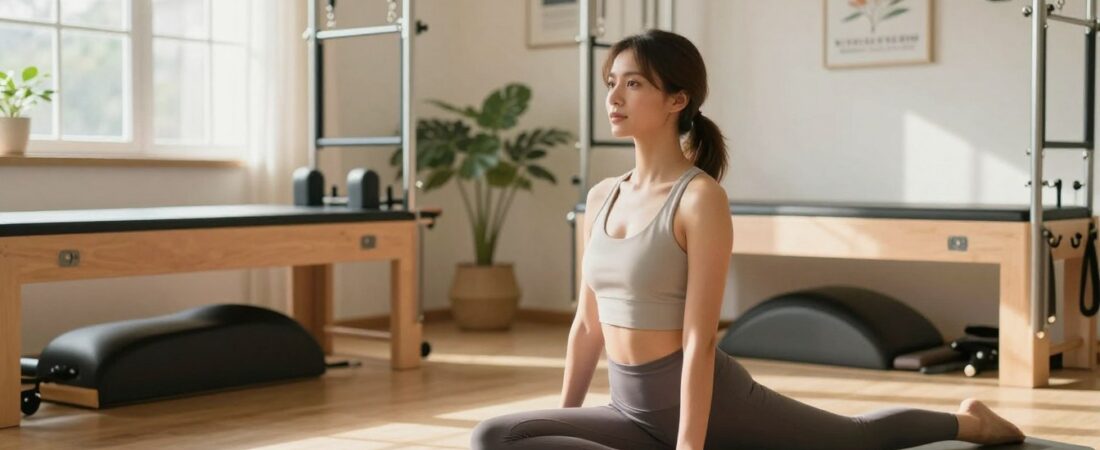
Imagine stepping onto your mat, the world outside fading away. You breathe deeply, feeling the weight of your day lift. Pilates is more than just a workout; it’s a journey to self-discovery and empowerment. Practicing in the comfort of your own space allows you to focus entirely on your progress.
With over 1,500 guided videos available, fitting a session into your busy schedule is easier than ever. You don’t need to commute to a studio or pay for expensive memberships. Instead, you can build strength, improve posture, and increase flexibility right from your living room.
As nearly 13 million people in the U.S. embrace this practice, you can join them in unlocking your potential. Joseph Pilates famously said, “In 10 sessions you’ll feel the difference, in 20 sessions you’ll see the difference, and in 30 sessions you’ll have a whole new body.” This guide will walk you through everything from setting up your space to mastering essential exercises.
Taking control of your fitness journey has never been more accessible. Embrace the flexibility of scheduling and workout intensity that suits you. Get ready to explore the world of Pilates and discover the incredible benefits that await.
Key Takeaways
- Experience the convenience of practicing Pilates in your own space.
- Access a vast library of guided videos to fit your schedule.
- Enjoy professional instruction without the need for a studio.
- Join millions who are enhancing their fitness journey through Pilates.
- Consistency is key; follow Joseph Pilates’ advice for noticeable results.
Understanding the Benefits of Pilates at Home
Practicing Pilates in your living room opens up a world of physical and mental benefits. This form of exercise is not only convenient but also highly effective. Research shows that Pilates at home delivers the same scientifically-backed advantages as studio sessions. A study published in the Healthcare journal confirms that virtual classes can be just as beneficial as in-person training.
One of the primary benefits is the development of deep core strength. Pilates engages the abdominal muscles and back extensors, which enhances stability during daily activities. Improved balance and gross motor coordination are also significant outcomes, as documented in Acta Neurologica Belgica.
Flexibility gains are another highlight. Controlled stretching and flowing movements can lead to noticeable improvements. According to the Journal of Bodywork, even a single Pilates workout can increase flexibility in all participants.
Posture is also positively impacted through consistent focus on spinal alignment. Findings from BMC Sports Science, Medicine and Rehabilitation indicate that practicing Pilates can improve neck and back posture significantly.
Moreover, the mental wellness benefits are substantial. Regular practice has been linked to reduced stress and decreased anxiety. Research involving over 800 participants, as reported in the Medicine journal, shows significant decreases in depressive symptoms through consistent Pilates practice.
At-home practice allows individuals to move at their own pace. You can pause when needed and repeat movements that feel good. This personalized experience fosters both physical and mental resilience.
Importantly, Pilates requires no bulky machines or fancy studio setups. It adapts easily to any schedule, energy level, or available space. The mind-body connection fostered by Pilates creates a natural stress relief, similar to meditation, that can enhance your entire day.
Setting Up Your Space for Pilates Success
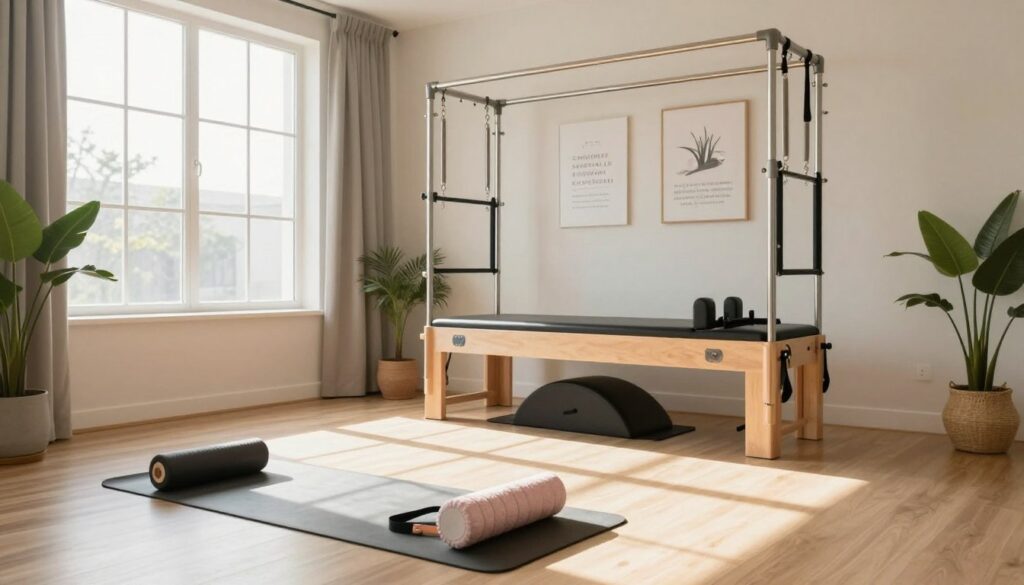
Creating a dedicated space for Pilates can significantly enhance your practice. Whether you have a spacious living room, a cozy bedroom, or a small corner in your apartment, you can transform it into an effective Pilates studio. No need for mirrors or expensive machines—just a clear area around your mat.
Start by assessing your available space. Make sure to clear enough room around the exercise mat so your arms and legs can extend fully in all directions. This will prevent any accidents or compromised movement patterns caused by hitting furniture or walls.
Lighting is another crucial factor. Poor lighting can force you to adjust your movements in ways that may strain your muscles or joints. Aim for a well-lit area to help you maintain proper form and focus during your workouts.
Consider creating a dedicated, clutter-free zone. This space should signal to your brain that it’s time to focus on your workout, even if it serves multiple purposes throughout the day. A clean environment can boost your motivation and concentration.
Flooring matters too. If you’re on a hard surface, use a thicker exercise or yoga mat to cushion your spine. This is especially important for beginners or those prone to back pain. The right mat can provide the support you need to perform exercises safely.
To maximize your focus, put your phone on silent and keep pets out of the room. Maintaining concentration is vital for the precision that Pilates demands. A clear, inviting space makes it easier to stay consistent with your practice, reducing excuses that might derail your routine.
Finally, remember the beauty of practicing Pilates at home. You can access over 1,500 guided videos anytime, transforming any cleared space into your personal powerhouse for fitness. Embrace this opportunity to create a space that inspires you to move and grow.
Essential Equipment for Flexible Pilates Workouts
Equipping your home for Pilates can significantly elevate your workout experience. The right tools help you achieve better results while making your practice more enjoyable. Whether you’re a beginner or an experienced practitioner, having essential equipment is key to success.
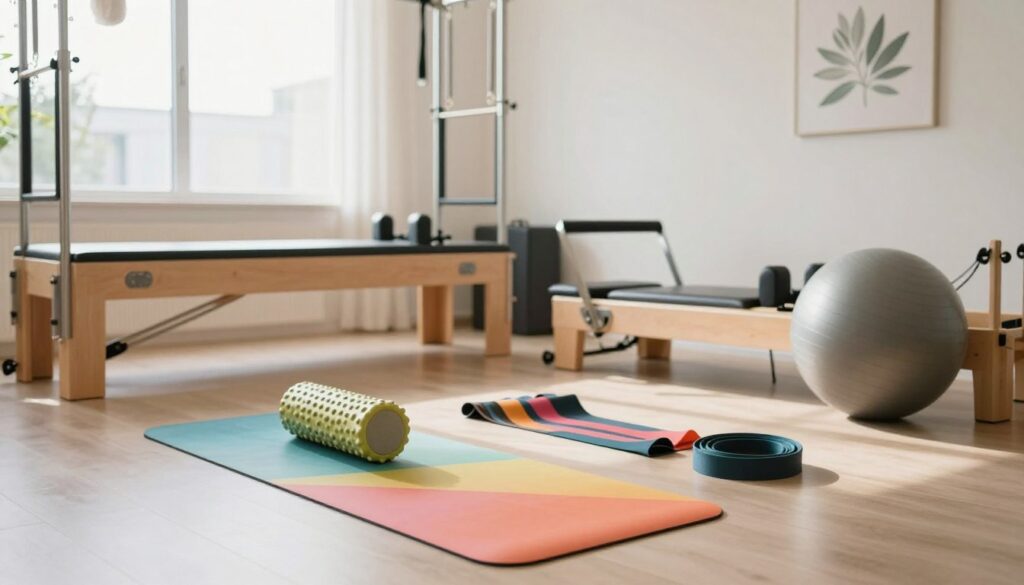
Start with a high-quality exercise or yoga mat. A thicker mat provides better cushioning and spinal support, especially on hard floors. This foundational piece of equipment is vital for your comfort and safety during workouts.
For those ready to take their practice to the next level, investing in a home Pilates reformer is a great option. Look for a studio-grade reformer that sits 14 inches off the ground. It should be constructed from durable materials, feature a smooth gliding carriage, and have adjustable springs for varying resistance levels.
The Flexia Smart Reformer is an excellent choice. It not only meets these specifications but also offers upright storage capability. This feature is perfect for reclaiming valuable floor space in multipurpose rooms, making it practical for home use.
However, expensive equipment is not mandatory. Many effective Pilates exercises use only body weight as resistance. You can also use common household items as safe substitutions. For example, a folded towel can provide better support than a slippery pillow.
To enhance your workouts, consider incorporating resistance bands, small inflatable Pilates balls, or Pilates rings when guided videos call for them. These tools can add variety and challenge to your routine.
Remember, professional instruction is accessible through over 1,500 guided videos. This means you can build strength, improve posture, and increase flexibility with or without specialized equipment. To ensure a smooth practice, watch workout videos beforehand to know exactly what equipment is needed.
The key to successful Pilates at home is not the amount of equipment you have but the consistency of your practice and maintaining proper form. For beginners, the mat is the single most important investment.
Warm-Up Techniques to Prepare Your Body
A thoughtful warm-up routine is crucial for enhancing your Pilates experience. It helps increase blood flow to your muscles, improves flexibility, and significantly reduces the risk of injury during your main workout.
Start by performing gentle stretches and movements to loosen up major joints, such as your neck, shoulders, wrists, hips, and ankles. One excellent warm-up exercise is the roll down:
- Stand with your feet hip-width apart and your arms relaxed at your sides.
- Tuck your chin and slowly roll forward, vertebra by vertebra, until you reach your lowest point.
- Take two deep breaths while in this position.
- Then, roll back up one vertebra at a time, ending with a tall spine and looking forward.
Repeat this roll down sequence three to four times. Feel free to stop and sway or pedal your feet at the bottom of the movement if it feels good for your body.
It’s essential to mobilize all major joints through gentle stretches and controlled movements before diving into more intense exercises. This includes your neck, shoulders, wrists, hips, knees, and ankles.
Warming up is especially important if you exercise first thing in the morning or after long periods of sitting. Muscles and joints may be stiffer and less prepared for movement during these times.
Always listen to your body’s signals during warm-up. If you experience any pain or discomfort, modify the movements or consult a fitness professional or healthcare provider.
A proper warm-up sets the tone for your entire workout. It allows for better control, deeper muscle engagement, and more effective practice of the Pilates exercises to follow. Spending just a few minutes on warm-up techniques prepares both your body and mind, creating a mindful transition from daily activities into focused Pilates practice.
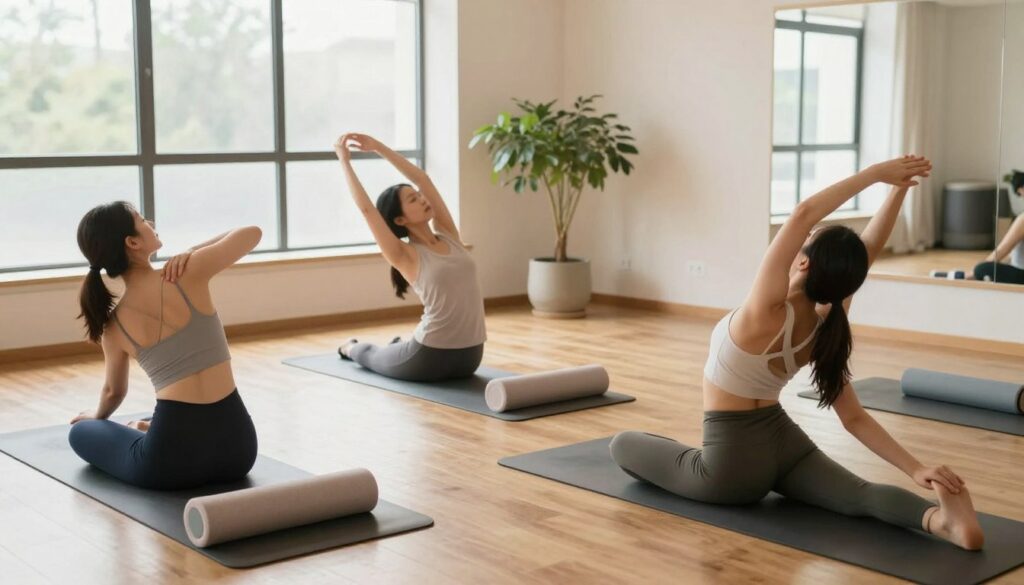
Core Pilates Exercises for Beginners and Beyond
Engaging in Pilates exercises offers a dynamic approach to building strength and flexibility. These exercises are perfect for both beginners and those looking to deepen their practice. Below are some essential movements to incorporate into your routine.
Standing Side-Kick Series
This exercise challenges balance while strengthening the outer thighs and glutes. Stand tall with one hand on a wall or chair for support. Lift one leg slightly to the side, keeping your hips level. Kick the lifted leg forward and back in a controlled motion. Start with 8-10 kicks per leg.
Criss-Cross
The Criss-Cross targets your obliques while improving coordination. Lie flat with your hands supporting your head and knees drawn toward your chest. Lift your shoulder blades off the mat and rotate your torso, bringing your right elbow toward your left knee while extending your right leg straight. Switch sides and aim for 6-8 rotations per side.
The Plank
The Plank is a full-body exercise that strengthens your core, shoulders, glutes, and posture muscles. Begin in a push-up position with your hands directly under your shoulders. Engage your core and squeeze your glutes to form a straight line from head to heels. Hold for 30-60 seconds, dropping to your knees if needed.
Glute Bridges
Glute Bridges strengthen your glutes and hamstrings while opening tight hip flexors. Lie down with your feet planted hip-width apart and knees pointing toward the ceiling. Engage your glutes and push through your heels to raise your pelvis into a bridge shape. Hold at the top, then lower slowly. Start with 10-12 bridges.
Roll-Up
The Roll-Up strengthens your abs while improving spinal mobility. Start flat on your back with legs extended and arms reaching overhead. Inhale to lift your arms, then exhale to roll up one vertebra at a time, reaching toward your toes. Reverse the motion to return to the floor, bending your knees if needed.
Stretch Forward
This seated stretch improves flexibility in your hamstrings, spine, and upper back. Sit tall with your legs extended and feet flexed. Inhale to lengthen your spine, then exhale and reach forward with rounded arms and a gentle curve in your back. Hold for 30-60 seconds while breathing into the stretch.
Swan Dive
The Swan Dive is a back-strengthening exercise that targets your spine, glutes, and posture muscles. Lie face down with your legs together and hands under your shoulders. Engage your glutes and press your feet into the floor. Inhale to lift your chest using your back muscles, not your hands, and lower slowly. Start with 6-8 repetitions.
Throughout these exercises, remember that proper form and control matter more than speed or quantity. Focus on executing each movement with precision, listening to your body, and modifying exercises as needed to build strength safely and effectively.
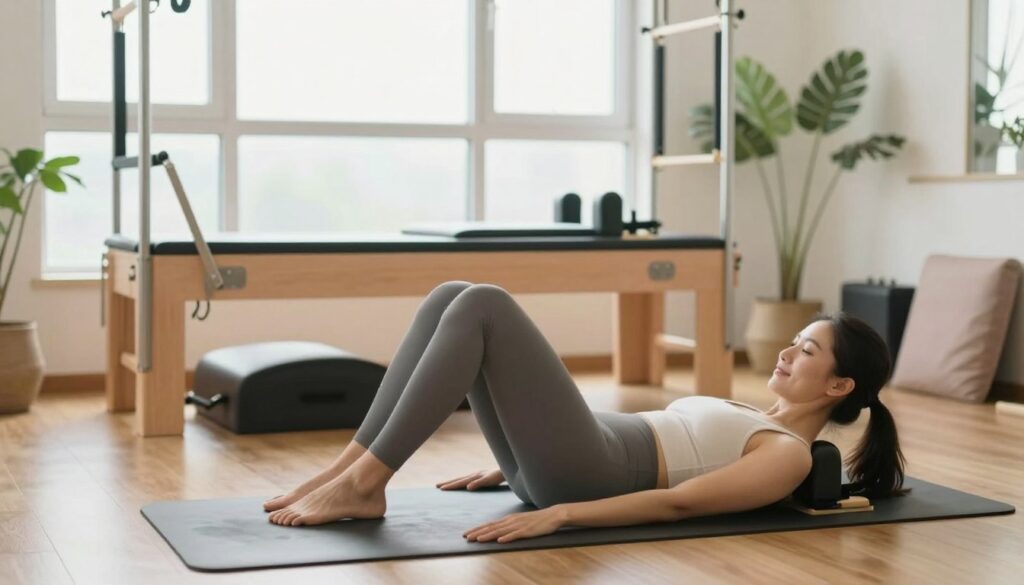
Transform Your Body with Flexible Pilates at Home: The 10-Minute Full-Body Pilates Reformer Workout
In just ten minutes, you can invigorate your muscles and enhance your flexibility. This quick, engaging workout is designed to strengthen and lengthen every muscle in your body. Perfect for busy schedules, this reformer workout provides comprehensive results without requiring a lot of time.
Key Moves and Spring Recommendations
Here are the ten essential moves included in this Pilates workout:
- Side Plank with Clam: Use a blue and orange spring. Lie on your side on the carriage, with your forearm against the shoulder blocks. Press your hips up into a side plank, then open your top knee to a clamshell position. Repeat for 30 seconds per side while keeping your shoulders relaxed.
- Articulated Bridges: No spring change is needed. Lie supine on the carriage with your feet on the footbar. Roll your spine up and down with control for 60 seconds to strengthen your posterior chain.
- Single Leg Stretch with Tricep Extension: Also no spring change. Lie supine with legs in tabletop, using short loops in your hands. Extend your right leg while stretching your arms long, alternating sides for 60 seconds.
- Single Leg Stretch with Tricep Taps Variation: In the same position, extend your right leg and lift your arms to the sky, maintaining tension in the straps for 60 seconds.
- Double Leg Stretch: Curl your head up to engage your core. Extend both legs while reaching your arms higher, circling your arms to tap your ankles. Repeat for 60 seconds.
- Row to Squat Side One: Use one orange spring. Place the sitting box in a shortbox position, standing facing the back of the reformer. Grab the long loop, send your hips back to the box while pulling your elbow in for a row. Repeat for 60 seconds per side.
- Hamstring Curl Side One: No spring change. Face the box, step your right foot into the long loop, and curl your hamstring to bring your heel to your glute for 60 seconds per side.
- Row to Squat Side Two: Repeat the previous move on the opposite side for 60 seconds.
- Hamstring Curl Side Two: Repeat the previous hamstring curl on the opposite side for 60 seconds.
- Leg Circles: Use two blue springs. Lie supine on the carriage with feet in long loops. Perform down circles for 30 seconds and up circles for 30 seconds to complete the sequence.
Modifications Without Equipment
If you don’t have a reformer, don’t worry! You can still enjoy the benefits of Pilates. Many of these exercises can be adapted using common household items or just your body weight. For instance, you can perform similar movements using a sturdy chair or even a mat on the floor. The Flexia Smart Reformer offers spring recommendations, and a spring conversion table is available for reference.
For those looking for a more extended practice, the full 30-minute version of this class is available on the Flexia YouTube channel. Access over 1,500 guided Pilates videos anytime, anywhere, and enjoy professional instruction from experienced trainers without needing a studio.
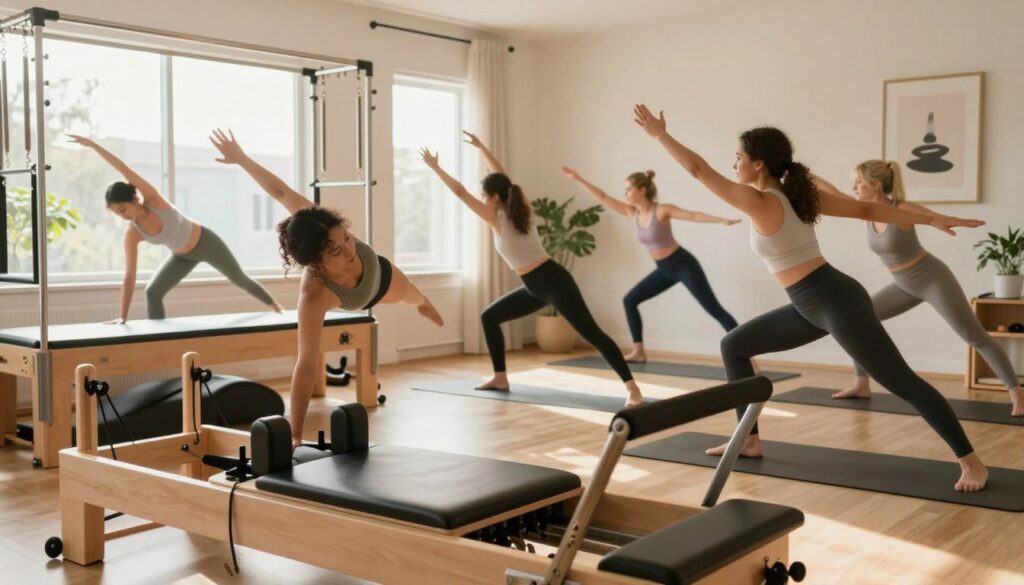
Improving Posture and Flexibility Through Pilates
Every movement in Pilates is designed to enhance your alignment and overall well-being. This practice emphasizes spinal alignment, gradually retraining your body to maintain an upright posture throughout the day. This is particularly beneficial for counteracting the slouched-forward posture that often develops from prolonged sitting at desks and looking at screens.
Studies have shown that Pilates positively impacts neck and back posture. According to research published in BMC Sports Science, Medicine and Rehabilitation, consistent practice can lead to significant improvements in posture. This scientific backing assures you that regular sessions can help you stand taller and feel more confident.
The controlled stretching and flowing movements of Pilates also work to expand your range of motion. This method ensures that you are not forcing your muscles beyond their limits, making it a safe and effective way to increase flexibility over time. In fact, a study in the Journal of Bodywork found that even a single Pilates workout increased flexibility in all participants.
Improved posture and flexibility translate into better performance in daily activities. Whether you’re walking up stairs, lifting groceries, or turning to look behind while driving, Pilates offers functional fitness that supports your everyday life.
Exercises like the Swan Dive, Roll-Up, and Stretch Forward directly target spinal mobility, back strength, and hamstring flexibility. This comprehensive approach fosters postural improvement and overall body awareness.
Professional instruction is readily available through guided videos, ensuring that you learn proper alignment cues and techniques. This way, you can maximize your posture and flexibility gains without needing a studio.
As you practice regularly, take note of how your posture improves throughout the day. Building core strength and body awareness through Pilates will make a noticeable difference in how you carry yourself.
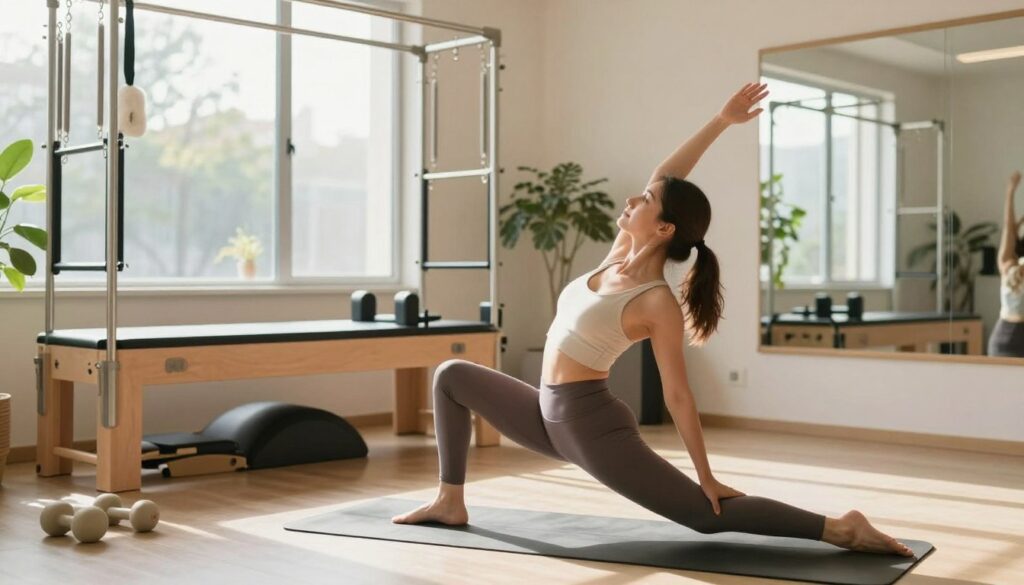
Enhancing Mental Wellness with Mindful Pilates Practice
Engaging in mindful movement can significantly enhance your mental wellness. The practice of Pilates is not just about physical strength; it also fosters a deep connection between the mind and body. This connection can create a natural stress relief similar to meditation, which positively influences your daily life.
Research published in the Medicine journal highlights that regular Pilates practice led to significant decreases in depressive symptoms and anxiety among over 800 participants. The focused movements and controlled breathing techniques in Pilates can help reduce stress, increase mindfulness, and improve your overall mood.
- The requirement to concentrate on precise movements and breath patterns pulls your mind away from stressors, enhancing mindfulness.
- Practicing Pilates at home allows you to create a personal sanctuary for mental wellness, moving at your own pace.
- A short 10-minute Pilates workout can serve as a mental reset, reducing stress and restoring focus during busy days.
- Breathing techniques learned in Pilates, such as deep lateral breathing, can help manage stress outside of workouts.
- With over 1,500 guided Pilates videos available, mental wellness support is accessible anytime, anywhere.
- View your Pilates practice as a holistic wellness tool that strengthens the body while calming the mind.
Incorporating these mindful practices into your routine can build emotional resilience and contribute to a more balanced life. Embrace the opportunity to enhance your mental wellness through Pilates.
Safety Tips for Practicing Pilates at Home
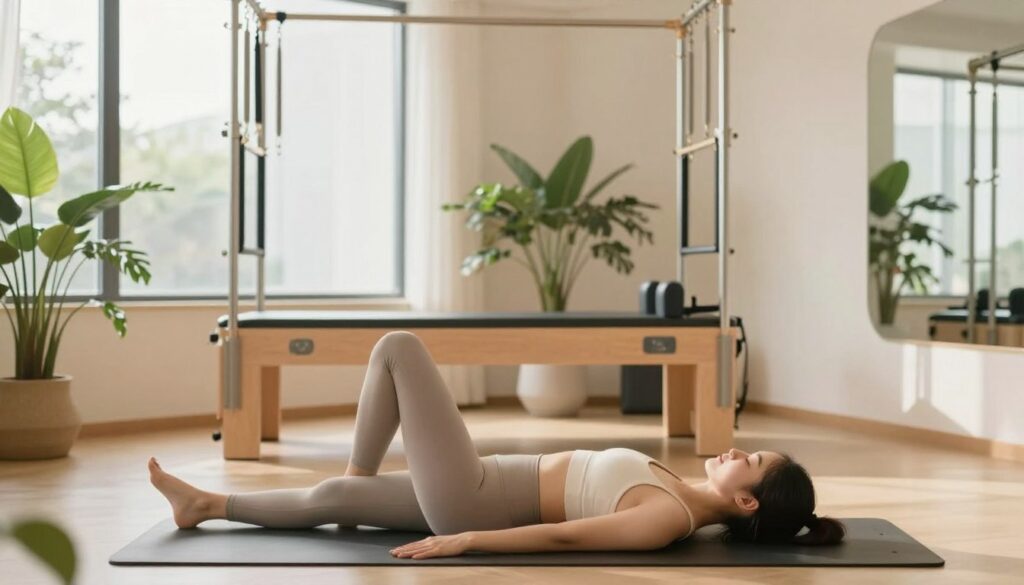
Practicing Pilates in the comfort of your home can be both safe and effective. However, taking a few precautions can help avoid injury and maximize results from every workout. According to a study from the Archives of Rehabilitation Research and Clinical Translation, just twice a week for 30 minutes is sufficient to achieve positive results.
Maintaining proper form is essential. Start with basic exercises and focus on executing them correctly rather than attempting advanced movements right away. Watch instructional videos carefully and pause to check your alignment. Remember, five perfect repetitions are far more valuable than 20 sloppy ones.
Listening to your body’s signals is crucial. Stop immediately if you feel sharp pain, dizziness, or unusual discomfort beyond normal muscle fatigue. Modify exercises as needed instead of forcing your body into positions that don’t feel right. If you experience any pain or discomfort, consult a fitness professional or healthcare provider.
Always warm up before diving into your main exercises, especially if you have been sitting for long periods or are exercising first thing in the morning when muscles may be stiffer. A proper warm-up prepares your body for movement and helps prevent injuries.
Be cautious about using inappropriate household items as props. Instead, opt for safe substitutions like a folded towel for support rather than a slippery pillow. It’s also a good idea to watch workout videos beforehand to know exactly what equipment is needed.
Finally, embrace a mindset of patience and self-compassion. Energy and flexibility can vary from day to day, and modifying exercises is a sign of wisdom and body awareness, not weakness.
| Tip | Description |
|---|---|
| Maintain Proper Form | Focus on basic exercises and ensure correct execution to avoid injury. |
| Listen to Your Body | Stop if you feel pain or discomfort; modify as needed. |
| Warm Up | Always warm up to prepare your body, especially after long periods of inactivity. |
| Use Safe Props | Choose appropriate household items for support; avoid slippery objects. |
| Be Patient | Understand that energy and flexibility vary; modifying is wise. |
Building Your Personalized Pilates Routine
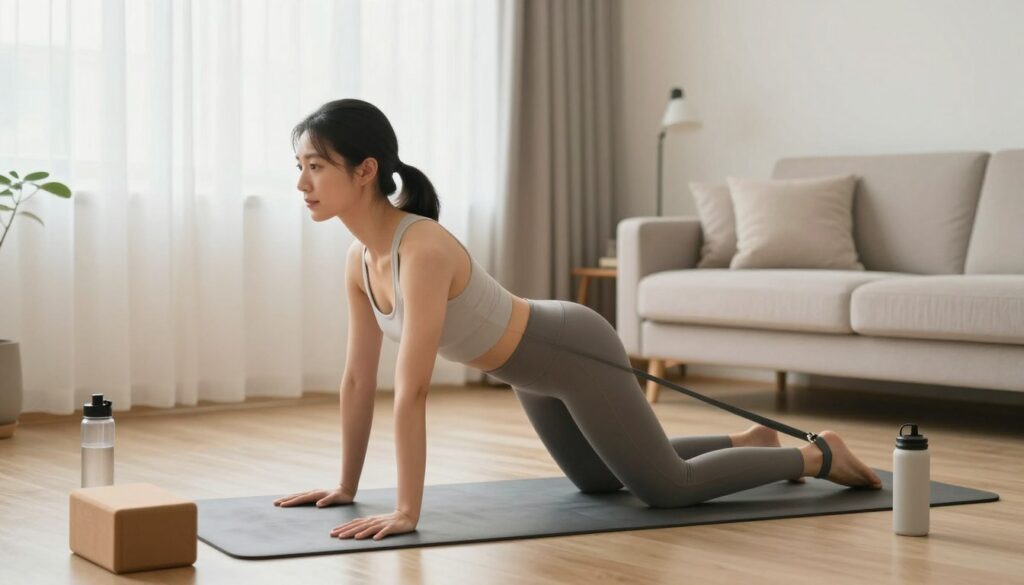
Establishing a custom Pilates routine can enhance your overall well-being and motivation. The key to success in any fitness journey is consistency. This means finding an approach that fits your schedule and keeps you excited to show up regularly.
Start by considering your availability. Research suggests beginning with two 30-minute sessions per week as a solid foundation. You can then adjust the frequency and duration based on your personal goals and energy levels.
There are many guided video options available. For instance, Club Pilates through Wellhub offers both virtual and in-person classes with professional instructors. Additionally, Apple Fitness+ provides high-quality instructor-led sessions that can include Pilates combined with light cardio for a more dynamic workout.
Explore different class lengths, from quick 5-minute core blasts to comprehensive 60-minute sessions. Pilates adapts to any schedule, and even short workouts can deliver meaningful benefits when practiced consistently.
If you have access to equipment, consider mixing mat-based Pilates classes with reformer workouts. This variety challenges your body in different ways and prevents workout boredom.
Pay attention to how your body feels after different types of sessions. Build a routine around the exercises and class styles that leave you feeling strong, energized, and motivated to return.
One of the greatest advantages of practicing Pilates at home is the ability to move at your own pace. You can pause when needed and repeat movements that feel good. This creates a truly personalized experience without the pressure of keeping up with a studio class.
With access to over 1,500 guided videos, there is always something new to try. This variety makes it easy to stay engaged and continue progressing toward your strength, posture, and flexibility goals over the long term.
| Tip | Description |
|---|---|
| Start Slow | Begin with two 30-minute sessions per week and adjust as needed. |
| Explore Options | Utilize resources like Club Pilates and Apple Fitness+ for guided classes. |
| Mix It Up | Combine mat classes with reformer workouts for variety. |
| Listen to Your Body | Choose classes that energize and motivate you to return. |
| Stay Engaged | Access over 1,500 videos to keep your routine fresh and exciting. |
Accessing Professional Instruction and Guided Videos
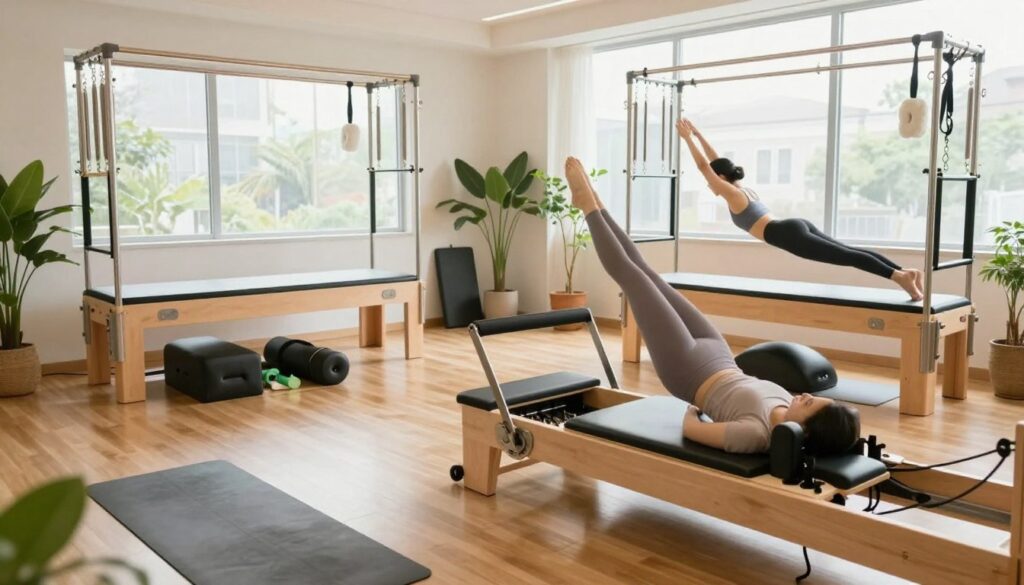
Diving into the world of online Pilates opens up a wealth of resources for your fitness journey. A simple search for “Pilates workout” on YouTube reveals over 52 million results. This vast collection includes videos tailored to every experience level, timeframe, and personal goal.
One excellent resource is Flexia, which offers free Pilates classes on their YouTube channel. Additionally, the Flexia Smart Reformer provides smart metrics to track your performance. For further inquiries about the Smart Reformer or reformer classes at home, visit the Flexia Knowledge Base or demo page, or reach out via email at hello@flexiapilates.com.
Another option for professional instruction is Wellhub, which gives access to both virtual and in-person classes with experienced trainers. Apple Fitness+ also offers high-quality, instructor-led Pilates videos that can be followed from home anytime.
Professional instruction from qualified trainers is now fully accessible without needing a studio. This allows practitioners to learn proper form, alignment cues, and progressions through guided video sessions. Exploring different instructors and teaching styles can help you find the ones that resonate with your preferences.
Consider subscribing to email lists from trusted Pilates platforms. This way, you can receive periodic mat exercise routines, new class notifications, and tips for improving your practice at home.
With the ability to access over 1,500 guided Pilates videos anytime, anywhere, maintaining a consistent practice is easier than ever. This flexibility is perfect for managing travel, schedule changes, or limited access to in-person studios.
Many platforms offer classes ranging from 5 to 60 minutes, making it simple to find a professionally guided Pilates workout that fits into any available time slot.
| Resource | Description |
|---|---|
| YouTube | Over 52 million Pilates workout videos available for all levels. |
| Flexia | Free Pilates classes and Smart Reformer metrics for performance tracking. |
| Wellhub | Access to virtual and in-person classes with professional instructors. |
| Apple Fitness+ | High-quality, instructor-led Pilates videos available anytime. |
Tracking Your Progress and Staying Motivated
Tracking your journey in Pilates can be as rewarding as the practice itself. As you engage in this transformative workout, it’s essential to monitor your progress. This will not only help you stay motivated but also ensure that you are on the right path toward achieving your goals.
Joseph Pilates famously said,
“In 10 sessions you’ll feel the difference, in 20 sessions you’ll see the difference, and in 30 sessions you’ll have a whole new body.”
This quote highlights the importance of consistency. Practicing good form during your sessions can lead to impressive results from the comfort of your living room.
- Start by keeping a simple workout journal. Record completed sessions, note improvements in exercise execution, and document how your body feels after each workout.
- Utilize technology like the Flexia Smart Reformer’s Pilates smart metrics. This tool helps you objectively track performance data, including strength gains and range of motion improvements.
- Take periodic photos or notes about your posture. Observing visible improvements in spinal alignment can serve as motivation to continue your practice.
- Set small, achievable goals. For example, aim to complete a certain number of workouts per week or master a specific exercise with proper form.
- Recognize non-scale victories, such as increased energy levels, better sleep quality, and improved flexibility in daily activities.
- Understand that motivation can fluctuate. Showing up for even a short Pilates session on low-energy days is more important than waiting for perfect conditions.
- Remember that the flexibility of practicing Pilates at home means there is always time for a workout. Consistency with proper technique will lead to the strength, posture, and flexibility transformations you seek.
By focusing on these strategies, you can maintain your motivation and track your progress effectively. Embrace the journey, and enjoy the rewards that come with each session.
Conclusion
Embracing a mindful practice can open the door to a fulfilling fitness journey. Pilates offers a unique opportunity to build core strength, enhance flexibility, and improve posture—all from the comfort of your living space. The beauty of this practice lies in its accessibility; with over 1,500 guided videos available, professional instruction is just a click away.
There’s no need to rush to a studio or feel pressured to perform. Instead, you can enjoy a low-impact workout that fits seamlessly into your day, whether it’s a quick session between meetings or a calming moment before bed. Take the first step by clearing a small space, unrolling your mat, and pressing play on a guided video.
Trust that consistency with proper form will lead to feeling stronger, more centered, and deeply connected to your body. Committing to this practice is not only possible but also sustainable and rewarding.